Low-Frequency Stochastic Gravitational-Wave Background in Gaia DR3 catalogue

Low-Frequency Stochastic Gravitational-Wave Background in Gaia DR3 catalogue
V. Akhmetov, L. Filipello, M. Crosta, M. G. Lattanzi, B. Bucciarelli, U. Abbas, F. Santucci
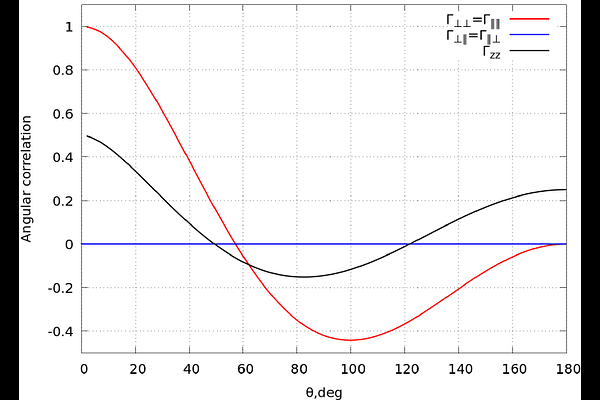
AbstractWe investigate the potential to detect low-frequency gravitational waves (GWs) through their imprints on the proper motions of distant quasars observed by the Gaia mission. Using astrometric data from Gaia DR3, we simulate the effect of GWs on the proper motions of quasars, incorporating their actual sky positions and measurement uncertainties. We investigate two data analysis techniques for the extraction and characterization of GW signals from quasar proper motions: Vector Spherical Harmonics (VSH) and angular correlation functions, commonly referred to as Hellings-Downs curves (HDC). Using realistic simulated data, we forecast their sensitivity and accuracy to GWs, and evaluate the impact of systematic errors. From these simulations, we derive an upper limit on the amplitude of a stochastic GW background, constrained by the observational timespan, astrometric precision, and the sky distribution of quasars. Compared to HDC, VSH appears more statistically robust, less prone to selection effects, and with a significantly smaller computational cost, scaling as N. The HDC method is more sensitive for detecting gravitational waves, but its complexity scales as N^2. We find that, with Gaia DR3 proper motion errors, the lower limit for a detectable GW strain is of 10^{-11}, with possible improvements to about 3 x 10^{-12} for the next Gaia Data Release 4 (for the same number of quasars). This limit holds for a stochastic GW spectrum integrated over all frequencies less than half the inverse of the 34-month observational timespan of Gaia DR3, corresponding to approximately 5.6 nHz. We also investigate how different data-restriction and weighting schemes influence the final estimate of the gravitational wave strain.