Fast and accurate AI-based pre-decoders for surface codes

Fast and accurate AI-based pre-decoders for surface codes
Christopher Chamberland, Jan Olle, Muyuan Li, Scott Thornton, Igor Baratta
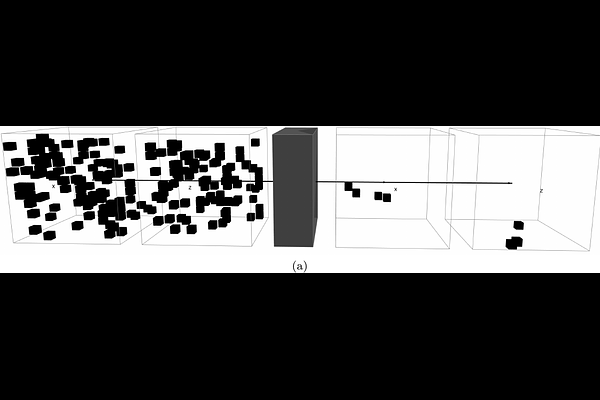
AbstractFast, scalable decoding architectures that operate in a block-wise parallel fashion across space and time are essential for real-time fault-tolerant quantum computing. We introduce a scalable AI-based pre-decoder for the surface code that performs local, parallel error correction with low decoding runtimes, removing the majority of physical errors before passing residual syndromes to a downstream global decoder. This modular architecture is backend-agnostic and composes with arbitrary global decoding algorithms designed for surface codes, and our implementation is completely open source. Integrated with uncorrelated PyMatching, the pipeline achieves end-to-end decoding runtimes of order $\mathcal{O}(1 μ\text{s})$ per round at large code distances on NVIDIA GB300 GPUs while reducing logical error rates (LERs) relative to global decoding alone. In a block-wise parallel decoding scheme with access to multiple GPUs, the decoding runtime can be reduced to well below $\mathcal{O}(1 μ\text{s})$ per round. We observe further LER improvements by training a larger model, outperforming correlated PyMatching up to distance-13. We additionally introduce a noise-learning architecture that infers decoding weights directly from experimentally accessible syndrome statistics without requiring an explicit circuit-level noise model. We show that purely data-driven graph weight estimation can nearly match uncorrelated PyMatching and exceed correlated PyMatching in certain regimes, enabling highly-optimized decoding when hardware noise models are unknown or time-varying, as well as training pre-decoders with realistic noise models. Together, these results establish a practical, modular, and high-throughput decoding framework suitable for large-distance surface-code implementations.