MAGIC observations of NGC 4278. The first low-luminosity radio galaxy with compact jets detected at TeV energies

MAGIC observations of NGC 4278. The first low-luminosity radio galaxy with compact jets detected at TeV energies
S. Abe, J. Abhir, V. A. Acciari, A. Aguasca-Cabot, I. Agudo, T. Aniello, S. Ansoldi, L. A. Antonelli, A. Arbet Engels, C. Arcaro, T. T. H. Arnesen, A. Babić, C. Bakshi, U. Barres de Almeida, J. A. Barrio, L. Barrios-Jiménez, I. Batković, J. Baxter, J. Becerra González, W. Bednarek, E. Bernardini, J. Bernete, A. Berti, J. Besenrieder, C. Bigongiari, A. Biland, O. Blanch, G. Bonnoli, Ž. Bošnjak, E. Bronzini, I. Burelli, A. Campoy-Ordaz, A. Carosi, R. Carosi, M. Carretero-Castrillo, A. J. Castro-Tirado, D. Cerasole, G. Ceribella, A. Cerviño, A. Chilingarian, A. Cifuentes Santos, J. L. Contreras, J. Cortina, S. Covino, F. D'Ammando, G. D'Amico, P. Da Vela, F. Dazzi, A. De Angelis, B. De Lotto, R. de Menezes, J. Delgado, C. Delgado Mendez, F. Di Pierro, R. Di Tria, L. Di Venere, A. Dinesh, D. Dominis Prester, D. Dorner, M. Doro, L. Eisenberger, D. Elsaesser, L. Fariña, L. Foffano, L. Font, S. Fröse, Y. Fukazawa, R. J. García López, S. García Soto, S. Gasparyan, M. Gaug, J. G. Giesbrecht Paiva, N. Giglietto, F. Giordano, P. Gliwny, T. Gradetzke, R. Grau, J. G. Green, P. Günther, D. Hadasch, A. Hahn, G. Harutyunyan, T. Hassan, L. Heckmann, J. Herrera Llorente, D. Hrupec, D. Israyelyan, J. Jahanvi, I. Jiménez Martínez, J. Jiménez Quiles, J. Jormanainen, S. Kankkunen, T. Kayanoki, P. M. Kouch, G. Koziol, H. Kubo, J. Kushida, M. Láinez, A. Lamastra, E. Lindfors, S. Lombardi, F. Longo, R. López-Coto, M. López-Moya, A. López-Oramas, S. Loporchio, L Lulić, P. Majumdar, M. Makariev, G. Maneva, M. Manganaro, S. Mangano, S. Marchesi, M. Mariotti, M. Martínez, P. Maruševec, D. Mazin, S. Menchiari, J. Méndez Gallego, S. Menon, D. Miceli, R. Mirzoyan, M. Molero González, E. Molina, H. A. Mondal, A. Moralejo, C. Nanci, A. Negro, V. Neustroev, M. Nievas Rosillo, C. Nigro, L. Nikolić, K. Nilsson, S. Nozaki, A. Okumura, J. Otero-Santos, S. Paiano, D. Paneque, R. Paoletti, J. M. Paredes, M. Peresano, M. Persic, M. Pihet, G. Pirola, F. Podobnik, P. G. Prada Moroni, E. Prandini, W. Rhode, M. Ribó, J. Rico, A. Roy, N. Sahakyan, F. G. Saturni, K. Schmitz, F. Schmuckermaier, T. Schweizer, A. Sciaccaluga, G. Silvestri, A. Simongini, J. Sitarek, D. Sobczynska, A. Stamerra, J. Strišković, D. Strom, M. Strzys, Y. Suda, H. Tajima, M. Takahashi, R. Takeishi, J. Tartera Barberà, P. Temnikov, T. Terzić, A. Tutone, S. Ubach, J. van Scherpenberg, M. Vazquez Acosta, S. Ventura, G. Verna, I. Viale, A. Vigliano, C. F. Vigorito, E. Visentin, V. Vitale, I. Vovk, R. Walter, C. Walther, F. Wersig, M. Will, P. K. H. Yeung, E. Torresi, G. Migliori, P. Grandi
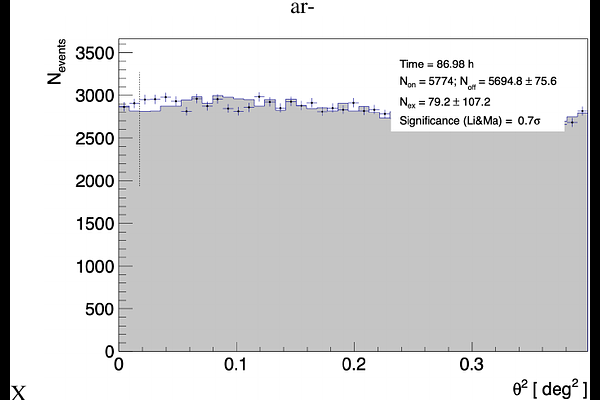
AbstractThe Large High Altitude Air Shower Observatory (LHAASO) Collaboration has recently reported the first detection at TeV energies of a low-luminosity radio galaxy, NGC 4278. The aim of this work is to investigate the high-energy properties of NGC 4278 during the flaring and subsequent quasi-quiescent states with the Florian Goebel Major Atmospheric Gamma Imaging Cherenkov (MAGIC) telescopes. NGC 4278 is located in the field of view of two blazars, 1ES 1215+303 and 1ES 1218+304, previously observed by the MAGIC telescopes. Therefore, we re-analyzed MAGIC observations made between 2010 and 2024 on these sources. We also modeled the broadband spectral energy distribution of the source during and after the flaring state at TeV energies. We did not detect any statistically significant $γ$-ray emission from NGC 4278 with MAGIC. The corresponding upper limits obtained using the entire MAGIC dataset ($F_{{\rm UL, }\, >150\, \mathrm{GeV}}=1.5 \times 10^{-12}\, \mathrm{ph \, s^{-1}\, cm^{-2}}$) are consistent with the LHAASO results. The best-fit models obtained for both emission states suggest that the emitting region is strongly particle-dominated, and an efficient acceleration mechanism has to be in action in order to reach TeV energies. The transition between the flaring and quasi-quiescent state cannot be explained by a simple radiative cooling of the emitting particles. The inferred jet power, of the order of $L_{\rm jet}\sim 10^{42}\, \mathrm{erg\,s^{-1}}$, is dominated by the kinetic component in both states and it is in a good agreement with previous, time-averaged observational estimates, supporting the idea that such high-energy flares might be recurrent. The jet, however, remains too weak to break the host-galaxy confinement.