Identification of two genomic cryptotypes of Plasmodium malariae in Africa

Identification of two genomic cryptotypes of Plasmodium malariae in Africa
Lefebvre, M. J. M.; Arnathau, C.; Houze, S.; de Thoisy, B.; Gonzalez, C.; Rondon, S.; Link, A.; Pain, A.; Fontaine, M. C.; Prugnolle, F.; Rougeron, V.
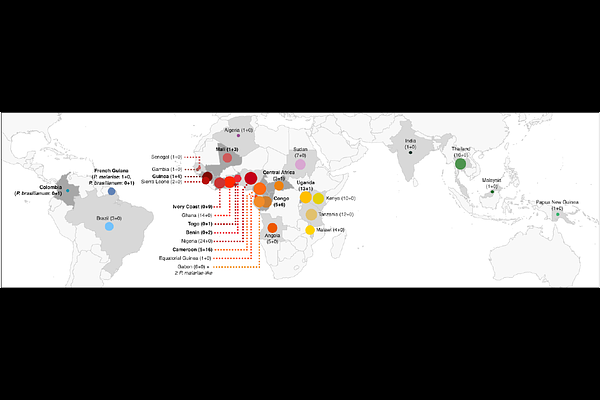
AbstractPlasmodium malariae is a neglected human malaria parasite that causes persistent, often asymptomatic infections and remains difficult to diagnose. Despite being generally associated with lower prevalence and severity than other malaria parasites, P. malariae represents a significant public health concern, particularly in Africa, but also as a zoonosis in South America with monkey-adapted Plasmodium brasilianum. Plasmodium malariae and P. brasilianum population genetic structure, evolutionary history, and adaptive potential remain poorly understood, largely due to the historical scarcity of whole-genome data. By screening 226 monkey samples from two Latin American countries, we identified 20 Plasmodium-positives across multiple primate species, highlighting the persistence of this parasite in sylvatic transmission cycles. We also investigated the evolutionary history and genetic diversity of P. malariae using whole-genome sequencing data. By combining 79 newly sequenced genomes with 248 publicly available genomes, we analyzed a filtered dataset comprising 179 P. malariae, two P. brasilianum, and two P. malariae-like genomes. Population structure analyses revealed the presence of two genetically distinct but recombining clusters across African P. malariae populations. These clusters occur across multiple African countries at varying frequencies, without clear geographic segregation. Genome-wide scans of genetic differentiation and selection further identified numerous cluster-specific signatures of adaptation, including loci putatively involved in interactions with human hosts and mosquito vectors. Our results provide the first evidence for fine-scale population substructure within African P. malariae and reveal ongoing adaptive processes that may contribute to its persistence and transmission. By uncovering previously unrecognized genetic diversity and selection patterns, this study highlights the importance of population genomic approaches for understanding the evolutionary dynamics of this neglected malaria parasite.