Elucidating the JNK Signaling Pathway in Neonatal Muscle Growth and Neuromuscular Contractures

Elucidating the JNK Signaling Pathway in Neonatal Muscle Growth and Neuromuscular Contractures
Shao, K.; Shoates, M.; Barrios, D.; Conte, S.; Tarabishi, A.; Velaga, G.; Shay-Winkler, K.; Goh, Q.; Cornwall, R.
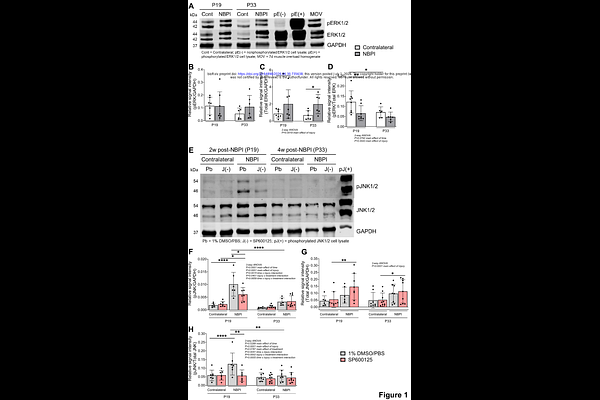
AbstractNeuromuscular contractures arising from neonatal brachial plexus injuries (NBPI) are highly disabling and currently incurable. We previously showed that contractures involve impaired longitudinal growth of denervated muscles, a defect mediated through myostatin (MSTN) signaling, a potent negative regulator of muscle size. However, MSTN-mediated contractures occur independent of canonical signaling pathways, including SMAD 2/3 and AKT/mTOR. Through a mouse model of NBPI, our present study extended these findings by revealing pharmacologic inhibition of JNK signaling, a noncanonical pathway downstream of MSTN, partially rescues contractures without restoring muscle length. Rather, JNK activation upregulates myofiber expression of the target gene Lmna, which encodes the nuclear envelope proteins Lamin A and Lamin C that are vital for nuclear stability, resulting in pervasive myonuclear displacement. These results suggest that other factors contribute to contracture pathology beyond deficits in longitudinal muscle growth. Further, while JNK inhibition does not restore length of denervated muscles, it impedes size and mass of normally innervated neonatal muscles, suggesting a requirement of JNK signaling for neonatal muscle growth. Our collective findings thereby establish new mechanistic insights into the molecular basis of aberrant muscle growth and neuromuscular contracture formation, potentially leading to novel targets for muscle restorative strategies and medical contracture prevention.