Virulence studies of the human gut pathobiont Bilophila wadsworthia using Galleria mellonella as model host

Virulence studies of the human gut pathobiont Bilophila wadsworthia using Galleria mellonella as model host
Matos, S.; Moniz, B.; Mil-Homens, D.; Pereira, I. C.; Pimenta, A. I.
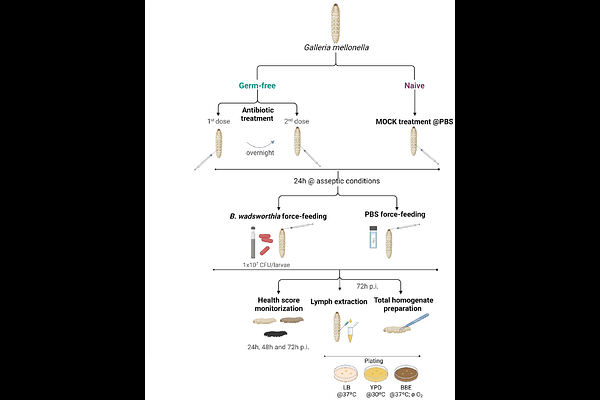
AbstractBilophila wadsworthia is a gut pathobiont implicated in dysbiosis-driven inflammation, yet its pathogenic mechanisms remain poorly investigated. Here, we evaluated the suitability of Galleria mellonella larvae as an in vivo model to study B. wadsworthia infection. Two infection routes were compared: oral inoculation to mimic gastrointestinal colonization and hemolymph injection to model systemic infection. Oral challenge had minimal impact on larval health, whereas hemolymph injection caused marked morbidity, including reduced mobility, impaired cocoon formation, and progressive melanization, indicating that access to the circulatory system is required for overt disease. Infection required live bacteria, with B. wadsworthia capable of intracellular replication within hemocytes, leading to transient depletion of circulating immune cells followed by compensatory hemocyte proliferation. These findings reveal tight coupling between bacterial proliferation and host immune dynamics. Comparison with other sulfidogenic bacteria suggests that Bilophila pathogenicity is likely to involve host-specific interactions. Overall, our results establish G. mellonella as a practical and ethically favorable model to investigate B. wadsworthia virulence, host-pathogen interactions, and mechanisms relevant to gut-associated infection.