CNS-resident B cells develop locally into a pro-inflammatory age-associated phenotype during aging and after stroke

CNS-resident B cells develop locally into a pro-inflammatory age-associated phenotype during aging and after stroke
McAtee, A.; Kenwood, M.; Ujas, T.; Colson, M. K.; Watkins, J.; Winford, E.; Cotter, K.; Britsch, D.; Betz, D.; Turchan-Cholewo, J.; Lutshumba, J.; Stuart, C.; Shah, G.; Runice, L.; Ebbert, M.; Cherra, S. J.; Nelson, P.; Sturgill, J. L.; Monson, N.; Goldberg, M. P.; Stowe, A. M.
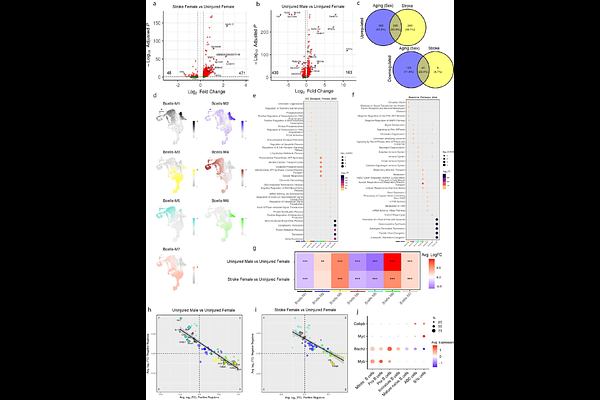
AbstractAging and age-related diseases like ischemic stroke induce chronic lymphocyte recruitment into the CNS. Conflicting effects on post-stroke functional recovery, however, are secondary to the differences in responding lymphocyte populations that shift immunophenotype with injury and age. To better define CNS-localized B cell subsets, we used flow cytometry, single-cell RNA sequencing, and B cell receptor sequencing on B cells isolated from uninjured and post-stroke brains of aged male and female mice. We identified a novel B1b cell progenitor pool distinct from canonical pleural/peritoneal niches. Trajectory analysis showed progenitor transition into age-associated B cell (ABC) subsets, and clonal expansion of IgM+ ABCs (ABC/B1b) and plasma cells following ischemic stroke. We also confirmed analogous ABCs and developing B cell populations in post-mortem human parenchymal tissue isolated from aged brain donors. These studies reveal unique B cell populations that can proliferate within the aging CNS and exhibit a conserved inflammatory signature across species.