Real-time, in situ fluorescence and optical density measurements of liquid cultures in simulated microgravity

Real-time, in situ fluorescence and optical density measurements of liquid cultures in simulated microgravity
Lantin, S.; Bansal, M.; Alper, H.; Lee, J. A.
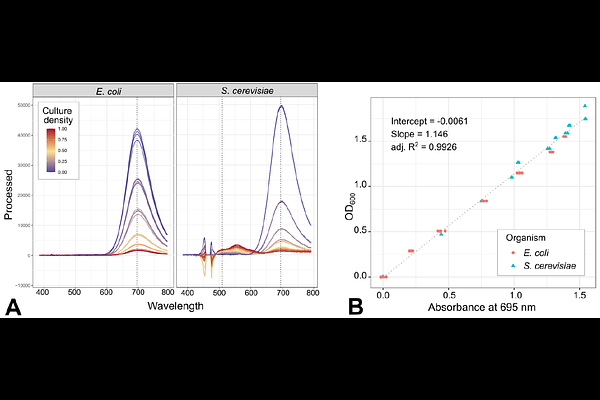
AbstractAs human space exploration expands to the Moon, Mars, and beyond, there is a growing need to study the effects of altered gravity on the microbial systems that we will bring with us for life support. Because spaceflight experiment opportunities are rare and resource-intensive, most space biology experiments are conducted using ground-based simulators. The most common microgravity simulator for microbial experiments, the rotating wall vessel, can approximate the low-shear and low-turbulence conditions that characterize microgravity. However, current designs do not allow for real-time measurement of growth or metabolic activity during rotation: experiments require destructive sampling or disruption of the microgravity simulation conditions. Here, we describe the development of an in situ spectroscopy system compatible with the Cell Spinpod rotating wall vessel, which enables measurement of both optical absorbance and fluorescence with high temporal resolution, producing growth curves similar to those from an off-the-shelf plate reader. These results are validated using two common microbial hosts: Escherichia coli and Saccharomyces cerevisiae. The Spinpod Optical System has the potential to diversify the types of microbiology experiments possible in simulated microgravity, allowing the measurement of not only growth curve parameters but also metabolic activity, gene expression, or community dynamics. It thus has the potential to improve the quality of experiments seeking to characterize microbial responses to spaceflight conditions.