Chromosome-level Genome Assembly of the Potato Leafhopper Empoasca fabae (Hemiptera: Cicadellidae)

Chromosome-level Genome Assembly of the Potato Leafhopper Empoasca fabae (Hemiptera: Cicadellidae)
Molligan, J.; Sylvestre, F.; Perez-Lopez, E.
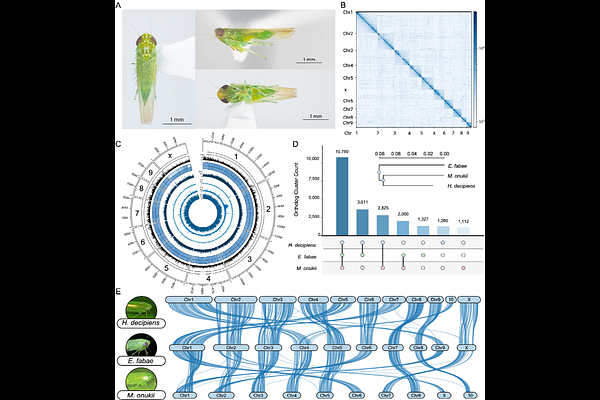
AbstractThe potato leafhopper, Empoasca fabae (Harris, 1841), is a highly polyphagous, migratory insect pest of eastern North America that feeds on more than 200 herbaceous and woody plant species, causing substantial losses to forage and field crops. Despite its agricultural and ecological importance, no genome has been available for this species. Here, we present the first chromosome-level genome assembly of E. fabae, generated from Oxford Nanopore long reads, Illumina short reads, and Omni-C proximity-ligation data. The final assembly spans 908 Mb across 132 scaffolds, with 99.8% of the assembly captured in ten chromosome-length scaffolds (nine autosomes and an X chromosome) with a scaffold N50 of 96.2 Mb. The assembly is highly complete, recovering 92.4% of conserved hemipteran single-copy orthologs, and is composed of 47.6% repetitive sequence, dominated by long terminal repeat retrotransposons and unclassified elements. Read-depth comparison between male and female individuals supports assignment of a single sex-linked chromosome, consistent with an XO sex-determination system. BRAKER3 gene annotation predicted 31,406 protein-coding genes after retaining the longest isoform per locus. Comparative genome analysis against the two closest related Typhlocybinae species with genomes available, Matsumurasca onukii and Hebata decipiens, revealed extensive chromosome-scale collinearity, while defining a shared core gene repertoire. This reference genome provides a foundation for comparative and population genomic studies and for investigating genetic traits in this economically important crop pest species.