Dysregulation of a novel autophagosome-mitochondria contact contributes to autophagy dysfunction and neurodegeneration in tauopathy

Dysregulation of a novel autophagosome-mitochondria contact contributes to autophagy dysfunction and neurodegeneration in tauopathy
Jia, N.; Guan, H.; Zuo, Y.; Jeong, Y. Y.; Amireddy, N.; RAJAPAKSHA, G.; Gonzalez, C. U.; Jaber, N.; Lee, Y.-K.; Nissenbaum, M.; Margolis, D. J.; Dai, W.; Kusnecov, A. W.; Cai, Q.
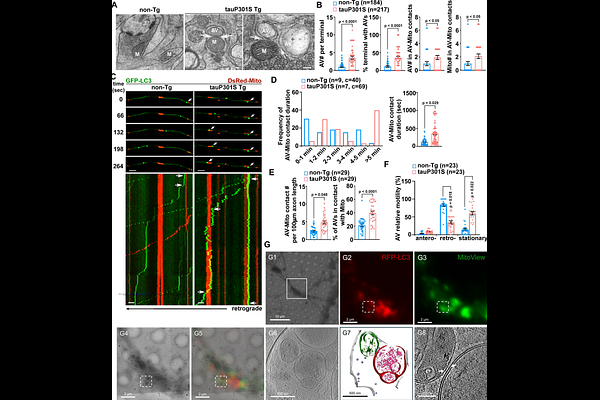
AbstractMitochondria engage in extensive communication with other organelles through membrane contacts. Perturbed mitochondria-organelle interactions are indicated in a variety of neurodegenerative diseases, but the underlying mechanisms remain poorly understood. Here, we report a new class of mitochondria-organelle communication: autophagosome/autophagic vacuole (AV)-mitochondria (Mito) contact, which exhibits hyper-tethering in tauopathy neurons, consequently hampering AV retrograde transport. Such defects are attributed to accelerated turnover of the contact release factor TBC1D15, triggered by mitochondrial bioenergetic deficit-induced hyperactivity of the AMP-activated protein kinase (AMPK). Increasing TBC1D15 levels or repressing AMPK activity normalizes AV-Mito contact release and restores retrograde transport of AVs, thereby increasing autophagic cargo clearance and reducing tau burden in tauopathy axons. Furthermore, overexpression of TBC1D15 enhances autophagic clearance and attenuates tau pathology, alleviating neurodegeneration and cognitive dysfunction in tauopathy mice. Taken together, our study provides new insights into AV-Mito contact dysregulation in tauopathy-related autophagy failure, laying the groundwork for the development of potential therapeutics to combat tauopathy diseases.