Beyond dairy: Identification of dental enamel proteins in ancient human dental calculus

Beyond dairy: Identification of dental enamel proteins in ancient human dental calculus
Leite, A.; Welker, F.; Godinho, R. M.; Gillis, R. E.; Islas, V. V.; Fagernas, Z.
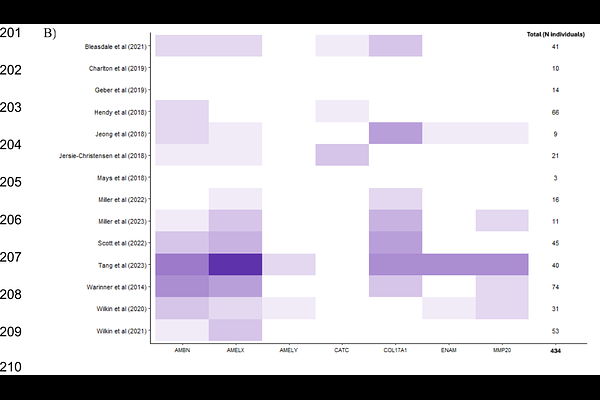
AbstractAncient human dental calculus is one of the richest archives of archaeological biomolecular information, providing direct evidence of diet, oral health, and the oral microbiome. Proteomic analyses of this biological matrix have so far focused mainly on oral microbes and dietary proteins, with milk proteins such as beta-lactoglobulin (BLG) providing the largest corpus of proteomic evidence. Despite the close relation between the various stages of dental calculus formation and mineralization with the dental enamel surface, proteins from the dental enamel matrix have not previously been reported outside of dental enamel tissue. Here we reanalysed 498 ancient dental calculus proteomes from 14 published studies (n=434 individuals) reporting the presence of BLG, spanning from the Neolithic to the Victorian Era and applying different protein extraction protocols (FASP, GASP, SP3 and in-solution digestion). Dental enamel matrix proteins were identified in ten studies (n=37 individuals), with amelogenin being the most frequently detected. Enamel peptides occurred more often in studies that applied SP3, although amelogenin was successfully identified through both SP3 and FASP. Structural proteins, including enamelin, ameloblastin, and MMP20, were also identified. The detection of AMELX and AMELY peptide sequences provided new insights into cases where the sex was previously undetermined. These findings establish dental enamel proteins as a new category of biomolecules detected in dental calculus, broadening its application beyond diet and microbiome studies to possible sex estimation.