Recurrent neuronal loops between medial prefrontal cortex and ventral tegmental area display sex-specific spatial reorganization in response to stress

Recurrent neuronal loops between medial prefrontal cortex and ventral tegmental area display sex-specific spatial reorganization in response to stress
Pancotti, L.; Dumas, E.; Marroquin Rivera, A.; Proulx, C. D.; Labonte, B.
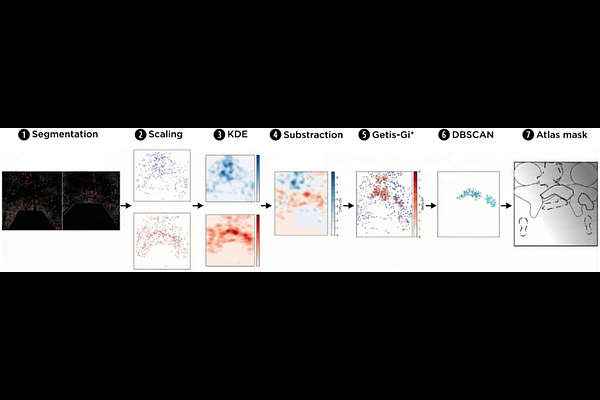
AbstractThe medial prefrontal cortex (mPFC) and ventral tegmental area (VTA) form a highly interconnected circuit involved in emotional regulation, stress reactivity, and cognitive processing. While prior research has established the anatomical and functional interactions between these regions, the precise organization and molecular identity of VTA neurons involved in unidirectional and bidirectional mPFC connectivity remains poorly defined, particularly under stress. We combined dual anterograde and retrograde viral tracing in male and female mice to label VTA neurons according to their connectivity with the mPFC. This approach identified three distinct subpopulations including mPFC-projecting, mPFC-receiving, and bidirectionally-connected neurons which accounted for nearly half of the labelled VTA population. Each group displayed molecular heterogeneity, with most cells expressing dopaminergic (TH) and glutamatergic (VGLUT2) transcripts rather than single dopaminergic or GABAergic (GAD1) markers. Acute and chronic stress exposure revealed sex- and circuit-specific patterns of c-Fos activation. In males, acute and chronic stress generated opposing rostrocaudally organized activation profiles, whereas females showed a more uniform increase in activity. Spatial clustering analyses further revealed that stress induces distinct hotspot organization within the VTA, with chronic stress promoting cohesive hotspot organization and consistent local enrichment of bidirectionally connected neurons despite a limited global activation. Together, these findings uncover a molecularly diverse mPFC-VTA circuitry with bidirectional connectivity that undergoes sex-dependent spatial and functional rearrangement under stress, providing new insights on circuit-level mechanisms of stress-related disorders.