NLR from soybean Rsv1 locus confers broad-spectrum resistance to soybean mosaic virus G1-G7 strains by recognizing viral P3 protein

NLR from soybean Rsv1 locus confers broad-spectrum resistance to soybean mosaic virus G1-G7 strains by recognizing viral P3 protein
Zhao, H.; Gou, B.; Liao, J.; Zhao, Y.; Yang, T.; Huang, P.; Zhu, Y.; Tie, Y.; Wang, M.; Gao, L.; Li, K.; Zhi, H.; Cui, X.; Chen, X.; Xu, Y.; Duan, K.; Wang, Y.; Tao, X.
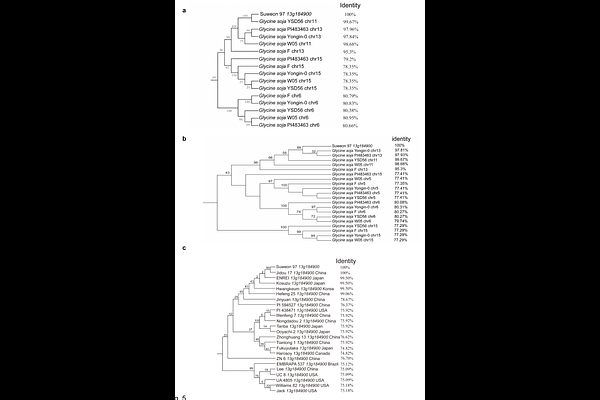
AbstractNucleotide-binding leucine-rich repeat (NLR) immune receptor genes are of significant value in disease resistance breeding and the control of viral diseases. Soybean mosaic virus (SMV) poses a serious threat to soybean production and the Rsv1 locus in soybean cultivar Suweon 97 confers broad-spectrum resistance against SMV strains G1 to G7; however, this locus harbors no fewer than 18 NLR genes, and thus the broad-spectrum antiviral mechanisms underlying the Rsv1 locus remain poorly understood to date. Here, we established a rapid and highly efficient screening system for cloning NLR genes from soybean Rsv1 locus and identified a broad-spectrum antiviral NLR gene 13g184900 from this highly complicated locus. The NLR encoded by 13g184900 can recognize viral P3 protein from all SMV strains (G1-G7) and another potyvirus Bean common mosaic virus (BCMV). The coiled-coil (CC) domain of this NLR directly interacts with viral P3 protein. Additionally, we showed that this NLR originated from wild soybean accession in East China and has been introduced into several soybean cultivars during domestication. Collectively, we developed a high-throughput screening system for identifying NLR genes in soybean and our study provides new mechanistic perspective on how the Rsv1 locus mediates the broad-spectrum resistance to all SMV G1-G7 strains.