Cardiac defects in spinal muscular atrophy and the role of SMN in cardiomyocyte homeostasis

Cardiac defects in spinal muscular atrophy and the role of SMN in cardiomyocyte homeostasis
Garner, R.; Ha, L. L.; Nery, F. C.; Spellman, R. G.; Chehade, L.; Eichelberger, E. J.; Duarte Lepez, S. D. S.; Johnstone, A. J.; Kothary, R.; Swoboda, K. J.; Alves, C. R. R.
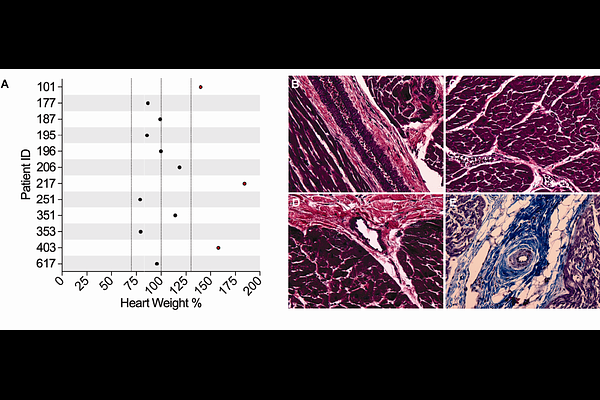
AbstractSpinal muscular atrophy (SMA) is characterized by motor neuron degeneration caused by deficiency of the survival motor neuron (SMN) protein. However, evidence increasingly supports broader systemic involvement. This study aimed to examine cardiac pathology in SMA patients and to investigate how reduced SMN levels impact cardiomyocyte homeostasis. We analyzed postmortem data from 14 SMA type I patients from the pre-treatment era, integrating gross anatomical, histopathological, and clinical findings. To investigate cardiomyocyte-intrinsic effects of SMN deficiency, healthy human cardiomyocytes were subjected to SMN knockdown and assessed using metabolic assays and transcriptomic profiling. Key findings were further investigated in vivo using the Smn2B/- mouse model of SMA. We found heterogeneous cardiac involvement in SMA patients, including cardiomegaly, variable fat deposition and interstitial fibrosis. SMN knockdown in human cardiomyocytes induced a metabolic shift and widespread transcriptional dysregulation, with pathway analyses identifying selective upregulation of PTEN signaling. Elevated PTEN protein levels were observed in a subset of human SMA hearts and in early postnatal hearts of Smn2B/- mice. Our results demonstrate that the heart remains a biologically relevant target of SMN deficiency and highlights cardiomyocyte-specific metabolic and PTEN signaling alterations as potential contributors to cardiac involvement in SMA.