A Nerve-Dependent NGF Receptor Switch Controls Corneal Epithelial Renewal In Neurotrophic Keratopathy

A Nerve-Dependent NGF Receptor Switch Controls Corneal Epithelial Renewal In Neurotrophic Keratopathy
Hussain, A.; Tajdaran, K.; Katturajan, R.; Mirmoeini, K.; Crabtree, J.; Quddam, A. I.; Wu, X.; Blum, N.; Konig, D. J.; Pepose, J. S.; Ali, A.; Shalom-Feuerstein, R.; Gordon, T.; Kaplan, D. R.; Borschel, G. H.; Feinberg, K.
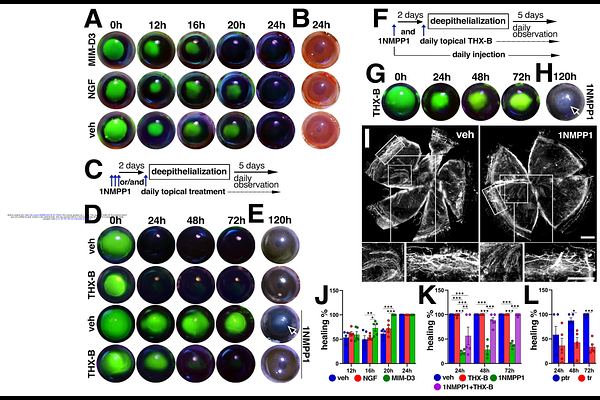
AbstractCorneal epithelial integrity depends on continuous epithelial renewal by limbal epithelial stem cells (LESCs), a process tightly linked to sensory innervation. Loss or impairment of innervation causes neurotrophic keratopathy (NK), a sight-threatening degenerative disease for which rhNGF, the only FDA-approved pharmacologic therapy, often has limited efficacy in advanced or refractory disease. The mechanistic basis for this limited response remains unclear. Using surgical, genetic, and pharmacologic approaches in a rodent model of NK with corneal Schwann cell ablation or structural and functional denervation, together with primary human LESCs, we examined how denervation alters NGF receptor signaling during epithelial repair. In innervated corneas, NGF promoted epithelial regeneration through TrkA. Denervation, however, increased expression of a second NGF receptor, anti-regenerative p75NTR, and activation of its effector JNK, and reduced the activity of the TrkA effector AKT in LESCs. In this altered receptor context, denervation-induced elevation of endogenous NGF amplified p75NTR signaling, thereby explaining the failure of topical rhNGF to rescue severely denervated NK phenotype corneas. Conversely, selective TrkA activation, either with the clinical-stage agonist tavilermide, or pharmacologic or genetic inhibition/ablation of p75NTR, restored AKT signaling and rescued epithelial healing in denervated corneas independent of reinnervation. These findings identify a nerve-dependent NGF receptor switch as a key regulator of corneal epithelial renewal and establish receptor-selective modulation as a mechanistically rational therapeutic strategy for treating NK. One Sentence SummaryCorneal denervation shifts limbal epithelial stem cell signaling from pro-regenerative TrkA-AKT toward anti-regenerative p75NTR-JNK, explaining the limited efficacy of recombinant human nerve growth factor (rhNGF; cenegermin), the only approved pharmacologic therapy for neurotrophic keratopathy, in severely denervated corneas and identifying receptor-selective modulation as a mechanistically distinct therapeutic strategy.