Transcranial random noise stimulation over the right prefrontal cortex does not improve performance on trained or untrained complex cognitive tasks

Transcranial random noise stimulation over the right prefrontal cortex does not improve performance on trained or untrained complex cognitive tasks
Scannella, S.; Riedinger, F.; Chenot, Q.
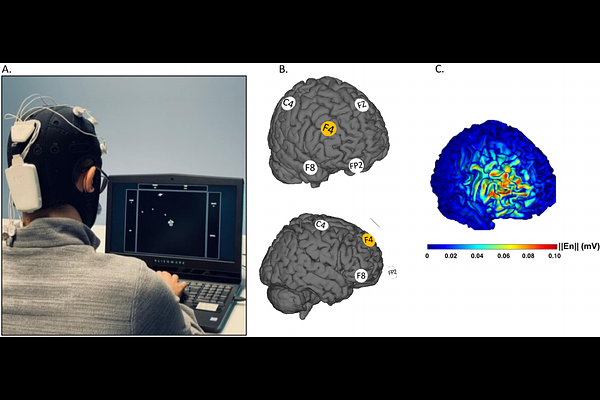
AbstractThe present study aimed at evaluating the impact of high-definition transcranial random noise stimulation (HD-tRNS) applied to the right dorsolateral prefrontal cortex (DLPFC) on direct learning in computer-based complex tasks, and potential far transfer effects to a flight simulator task. Thirty young pilots in general aviation participated in a double-blind 11-week protocol that included a two-hour baseline session (week 1), 10 one-hour training sessions (weeks 2 to 6), a short-term (week 7) and a long-term (week 11) evaluations. Both stimulated, and sham groups exhibited improvements in trained (MATB and Space Fortress video game) and untrained (Flight Simulator) tasks from baseline to the first and last evaluation sessions. No significant differences between groups have been found either in terms of direct (trained tasks) or transfer (flight simulator and associated mental workload) effects. These findings contribute to the ongoing debate on the efficacy of transcranial brain stimulation for enhancing learning in healthy participants. Specifically, the present study demonstrates that the applied stimulation protocol yields no measurable benefit to learning processes, underscoring the need to explore alternative stimulation parameters and methodological approaches.