Synergistic action of different molecular mechanisms causes striking levels of insecticide resistance in the malaria vector Anopheles gambiae

Synergistic action of different molecular mechanisms causes striking levels of insecticide resistance in the malaria vector Anopheles gambiae
Chen, M.; Remadi, L.; Tsakireli, D.; Kokkas, E.; Balaska, S.; Teta, S.; Ooi, J. M. F.; Hemingway, J.; Paine, M. J. I.; Lycett, G.; Vontas, J.; Grigoraki, L.
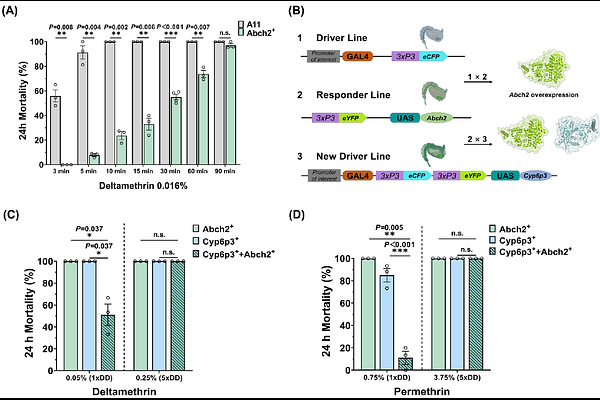
AbstractIntensifying insecticide resistance in the malaria vector Anopheles gambiae poses a serious threat to the hard-won gains in reducing malaria deaths in Africa. The genetic basis of insecticide resistance is often complex, involving multiple genes and mutations. However, we still lack a clear understanding of how each mechanism contributes to overall resistance and how highly resistant phenotypes arise. In this study we generated a suite of transgenic An. gambiae strains carrying either individual mechanisms or combinations that frequently co-occur in nature. We show that co-overexpression of different classes of detoxification enzymes (CYP6P3, CYP6M2, CYP9K1, ABCH2, GSTE2 and COEAE6G), as well as the overexpression of detoxification enzymes in the presence of target site resistance mutations, can lead to substantially greater levels of resistance. Our findings suggest that increased resistance strength is a primary driver for selection of multi-mechanism resistance and are transformative for the scientific insight required to design robust molecular diagnostics for timely and reliable resistance detection in the field. We further show that P450 based resistance can constitute an Achilles heel for highly resistant mosquitoes, making them more vulnerable to pro-insecticides; compounds that typically require P450 activation. Our results advance our understanding of the mechanistic basis of insecticide resistance and have important implications for the design and implementation of effective and evidence-based resistance management strategies.