MYH9, a cytosolic myosin protein, binds to dengue virus 3'UTR and facilitates replication and cellular entry

MYH9, a cytosolic myosin protein, binds to dengue virus 3'UTR and facilitates replication and cellular entry
Maisnam, D.; Rathore, D.; Gandhi, L.; Chauhan, P.; Venkataramana, M.
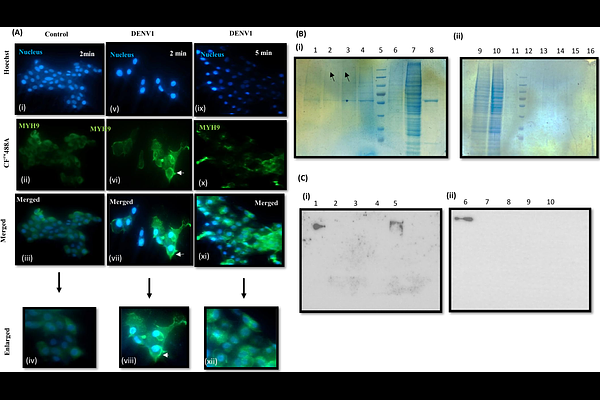
AbstractDengue infections are considered an increasing threat to mankind due to their rapid global spread rate. The development of a widely accepted drug/vaccine is hindered due to an incomplete understanding of the virus lifecycle. Present data suggest that a cytoskeleton protein, called MYH9 binds to the 3'UTR at A4 region, a highly conserved part of the UTR across the serotypes. The levels of this protein were found to be elevated in the cells infected with the virus and the above increase is commensurate with the virus load. This protein is found to accumulate at the endoplasmic reticulum (site of virus replication) and interacts with dsRNA (a replicative intermediate), suggesting its involvement in replication. Inhibition of this protein's expression by its siRNA reduced viral load, supporting its role in viral replication. Immunofluorescence studies indicate that this protein accumulates at the cell periphery and pulldown studies suggest that this protein interacts with the viral envelope protein, suggesting a role in the dengue virus's cellular entry, possibly by acting as a receptor. Use of an anti-MYH9 drug, ML-7 indicated the reduction of the virus load, prevented the accumulation at the periphery and aided in regaining the cell morphology of virus infected cells, confirming its role in replication and entry. Collectively, these studies demonstrate a dual function of MHY9 in the virus life cycle, which may serve as a general paradigm for the other viruses and hence to develop specific drugs.