Hyperactivation of TAK1 causes skeletal muscle pathology reminiscent of inflammatory myopathies

Hyperactivation of TAK1 causes skeletal muscle pathology reminiscent of inflammatory myopathies
Tomaz da Silva, M.; Roy, A.; Kumar, A.
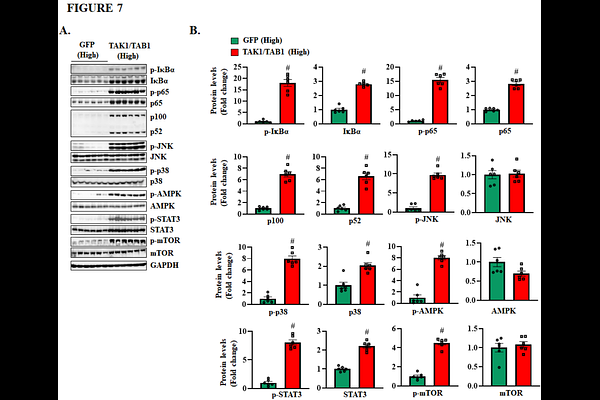
AbstractLoss of skeletal muscle mass and strength is a debilitating consequence of various chronic diseases, inflammatory myopathies, and neuromuscular disorders. Inflammation plays a major role in the perpetuation of myopathy in degenerative muscle diseases. TAK1 is a major signaling protein that mediates the activation of multiple signaling pathways in response to inflammatory cytokines and microbial products. Recent studies have demonstrated that TAK1 is essential for the growth and maintenance of skeletal muscle mass in adult mice. However, the effects of overstimulation of TAK1 activity in the regulation of skeletal muscle mass remain unknown. In the present study, using AAV vectors, we investigated the effect of varying levels of TAK1 activation on skeletal muscle in adult mice. Our results demonstrate that while low levels of TAK1 activation improve skeletal muscle mass, sustained hyperactivation of TAK1 causes myopathy in adult mice. Excessive stimulation of TAK1 manifests pathological features, such as myofiber degeneration and regeneration, cellular infiltration, increased expression of proinflammatory molecules, and interstitial fibrosis. Hyperactivation of TAK1 also upregulates proteolytic systems and various catabolic signaling pathways in skeletal muscle of adult mice. Altogether, our study demonstrates that physiological levels of activation of TAK1 leads to myofiber hypertrophy, whereas its hyperactivation results in myofiber damage and other pathological features resembling inflammatory myopathies.