A conserved root-knot nematode effector targets plant kinesin light chain related proteins to promote parasitism

A conserved root-knot nematode effector targets plant kinesin light chain related proteins to promote parasitism
Soule, S.; Misiani, S.; Mulet, K.; Mila, I.; Philippon, J.; Caravel, C.; Mejias, J.; Jaubert, S.; Abad, P.; Peeters, N.; Favery, B.; Quentin, M.
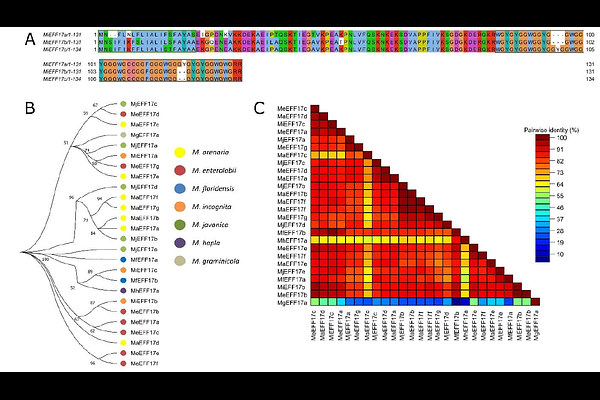
AbstractRoot-knot nematodes (RKNs) are obligate plant parasites that establish biotrophic interactions with a wide range of host plants, causing major crop losses worldwide. During infection, RKNs secrete effector proteins from their esophageal glands into root tissues via a stylet. These effectors target specific subcellular compartments and manipulate host cell functions to induce the formation of hypertrophied and multinucleated giant cells, which serve as feeding sites essential for nematode development. Here we describe a new RKN-specific effector, EFFECTOR17 (EFF17), conserved in the five most damaging RKN species: Meloidogyne incognita, M. enterolobii, M. arenaria, M. javanica, and M. hapla. In situ hybridization showed that EFF17 genes are specifically expressed in the esophageal glands of various RKN species. Silencing EFF17 in M. incognita reduced its reproduction on Nicotiana benthamiana, demonstrating a key role in parasitism. Yeast two-hybrid and split luciferase assays revealed that tomato and Arabidopsis KINESIN LIGHT CHAIN RELATED (KLCR)/CELLULOSE-MICROUBULE UNCOUPLING (CMU) proteins are host targets of MiEFF17. Arabidopsis cmu mutants developed significantly fewer galls and egg masses. Our findings propose that EFF17 manipulates KLCR function to promote parasitism.