Transient architecture of the embryonic pancreas determines endocrine mass

Transient architecture of the embryonic pancreas determines endocrine mass
Ahuja, N. H.; Bierschenk, T.; Chaney, C.; Pramanik, T.; Mills, A.; Luo, P. M.; Cowdin, M. A.; Lin, J.; Tsunezumi, J.; Dean, K. M.; Marciano, D. K.; Carroll, T. J.; Cleaver, O.
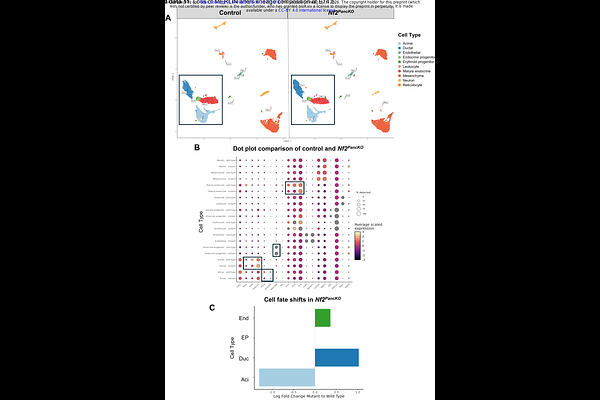
AbstractDuring organogenesis, epithelial tissues undergo extensive three-dimensional (3D) remodeling while simultaneously generating specialized cell types. Whether these transient architectural states actively instruct lineage allocation remains unclear. Here we identify a morphogenetic stage in which resolution of epithelial stratification is required for lineage allocation and establishment of endocrine cell mass. We show that loss of the Hippo pathway regulator Merlin disrupts lumen morphogenesis and prevents formation of the transient 3D epithelial architecture that characterizes normal pancreas development. Failure to establish this architectural state alters lineage allocation, impairing acinar differentiation, markedly reducing adult endocrine cell mass, and disrupting glucose homeostasis. Mosaic analyses reveal that these lineage defects arise non-cell autonomously, demonstrating that epithelial architecture itself instructs cell fate decisions. Mechanistically, Merlin coordinates PI3K-regulated polarized membrane trafficking required for apical membrane biogenesis and lumen formation. Together, these findings identify Merlin-dependent membrane trafficking as a mechanism coupling epithelial morphogenesis to lineage allocation and demonstrate that transient developmental architectures can determine the cellular composition of mature organs.