Distinct clonal dynamics and interactions within the microenvironment near tumor stroma interfaces in rare histologic variants of bladder cancer

Distinct clonal dynamics and interactions within the microenvironment near tumor stroma interfaces in rare histologic variants of bladder cancer
Quezada, L.; Bhalla, S.; Biswas, A.; Packiam, V.; Riedlinger, G.; Ghodoussipour, S.; De, S.
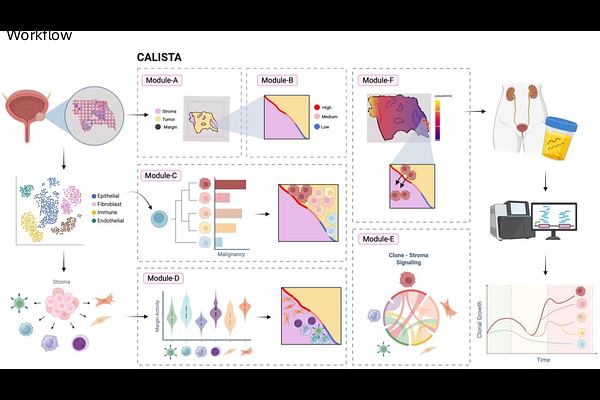
AbstractRare histologic variants of bladder carcinoma, such as squamous cell and neuroendocrine carcinoma, generally have a worse prognosis compared to pure urothelial carcinoma (PUC), but the underlying molecular determinants are not well understood. We developed a novel computational genomics framework to characterize the dynamics of tumor-stroma-immune interactions at tumor borders and interiors from spatial transcriptomics data. We profiled bladder carcinoma samples of different histological variants on the Visium platform. Differences in clonal phylogeny and spatial heterogeneity of major subclones between the samples suggested disparate clonal spatiotemporal dynamics and interaction with stromal and immune compartments - which was notably prominent at the tumor-stroma interface. Our framework captured immune heterogeneity in the tumor microenvironment, including variations in the presence and architecture of tertiary lymphoid structures. Our analyses further indicated that there are substantial histology-specific differences in cell type composition, clonal spatial heterogeneity, inter-cellular signaling, and cellular processes. These variations collectively suggest divergent mechanisms of microenvironment remodeling across bladder cancer histologies. Cell-free DNA profiling from liquid biopsy captured tumor and microenvironment signatures from tumor boundaries and interiors, potentially allowing for tracking clonal dominance non-invasively. Our method tracks the trajectory of neoplastic disease in bladder cancer samples while identifying aggressive features.