Characterisation of the new microalgal protein xATPA related to the F-type ATP synthase α subunit, from the ecosystem to the molecule

Characterisation of the new microalgal protein xATPA related to the F-type ATP synthase α subunit, from the ecosystem to the molecule
Penot-Raquin, M.; Novak Vanclova, A. M. G.; Powell, V.; Corbeau, Y.; Younes, C.; Eugene, M.; Bouceba, T.; Pionneau, C.; de Almeida Bastos, V.; Garcia, M.; Bowler, C.; Dorrell, R. G.
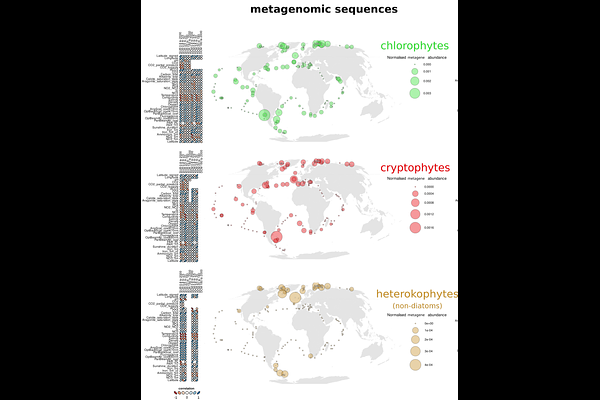
AbstractMicroalgal metabolism relies on their chloroplasts, and involves both nucleus and plastidial-encoded proteins of various evolutionary origins. The plastidial ATP synthase complex is a key player in photosynthesis, and has been extensively studied in plants. However, our knowledge in other photosynthetic eukaryotes remains limited, despite their importance in marine environments. Here, we report the characterisation of a novel homologue of the F-type ATP synthase alpha subunit, hereby named xATPA, widespread in microalgae but absent from other photosynthetic organisms. Comparisons of xATPA sequences and predicted structures revealed a specific feature, the bump domain, and highlighted the absence of an ATP-binding site. We assessed xATPA prevalence in microalgae in the global ocean using environmental data from Tara Oceans, with a particular focus on diatoms, and demonstrate that its expression is associated with polar summer conditions. Using a reverse genetic approach in the model diatom Phaeodactylum tricornutum, we show that xATPAP t has a plastidial localisation, and that xATPA KO mutants exhibit growth deficiencies in a combination of low temperature, low salinity and constant light, consistent with environmental analysis. Surprisingly, both RNAseq and physiological assays suggest that xATPA is not involved in ATP synthase functions. On the other hand, xATPA interacts with other F1 ATP synthase subunits in vitro, which we suggest forms transient unassembled complexes. This study hence represents a comprehensive analysis of a novel protein from the environment to the lab, and reveals a new player in the plastidial physiology of eukaryotic microalgae.