ZeaMiC: a Publicly Available Culture Collection of Maize Root-Associated Bacteria

ZeaMiC: a Publicly Available Culture Collection of Maize Root-Associated Bacteria
Garrell, A.-K.; Ginnan, N.; Swift, J. F.; Pal, G.; Zervas, A.; Pestalozzi, C.; Tang, C.; Tso, F.; Ford, N. E.; Niu, B.; Castrillo, G.; Schlaeppi, K.; Hahnke, R. L.; Wagner, M. R.; Kleiner, M.
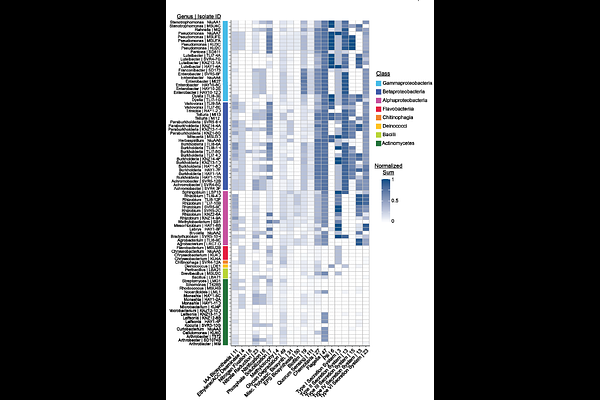
AbstractPlant-associated microbiota are composed of hundreds of microbial species. For many of them, little is known about their individual functions and even less is known about their emergent community-level traits. While culture-independent methods provide valuable insights into the composition, diversity, and functional potential of plant-associated microbiota, culture-dependent methods are essential for reductionist lines of inquiry into the roles of individual species and their interactions within a community. Here, we present ZeaMiC, a publicly available culture collection of root-associated bacteria from Zea mays (maize). This resource comprises 88 isolates obtained from diverse soils and several maize genotypes, with live cultures available through DSMZ (German Collection of Microorganisms and Cell Cultures) both as single stocks and as cost-effective bundles (https://www.dsmz.de/collection/catalogue/microorganisms/microbiota/zeamic). To maximize relevance, isolates were selected to be representative of maize root-associated microbiomes in the Corn Belt of the United States, based on abundance-occupancy patterns from previously published root microbiome data, phylogenetic diversity, and literature-based evidence of functional importance. Whole-genome sequencing and annotation revealed genes associated with root colonization, plant growth promotion, and nutrient cycling, including functions such as chemotaxis, biofilm formation, secretion systems, hormone modulation, and phosphate solubilization. This collection serves as a community resource for future mechanistic studies of plant-microbe and microbe-microbe interactions, filling the gap in our understanding of the ecological interactions in plant microbiomes.