Nucleus confinement within concave microcavities modulates nuclear morphology, subnuclear dynamics and mechanotransduction in human osteosarcoma cells

Nucleus confinement within concave microcavities modulates nuclear morphology, subnuclear dynamics and mechanotransduction in human osteosarcoma cells
Tahmaz, I.; Borghi, F. F.; Milan, J. L.; Kunemann, P.; Petithory, T.; Bendimerad, M.; Luchnikov, V.; Anselme, K.; Pieuchot, L.
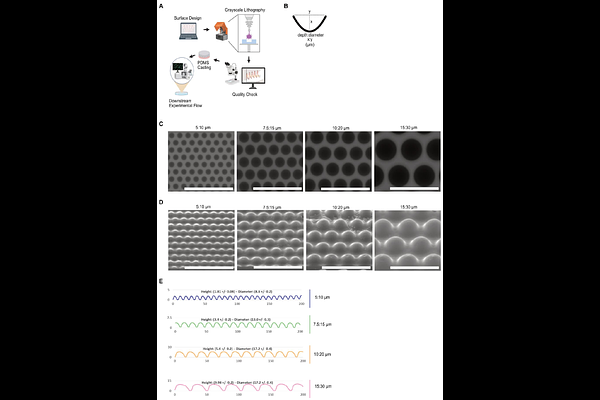
AbstractCells dynamically integrate biochemical and mechanical signals arising from their surrounding microenvironment to regulate morphology and behavior. Mechanical cues like matrix stiffness, surface topography, and other physical perturbations modify biophysical signals. Surface topography, particularly curvature regime acts as any important mediator of mechanotransduction by coordinating cytoskeletal organization, focal adhesion dynamics, and nuclear architecture. Curvature response has been demonstrated at broader length scales and influences nucleus shape change, chromatin organization, and gene regulation, positioning the nucleus as an active mechanosensitive hub. Bone tissue consists of a curvature-rich microenvironment defined by a trabecular architecture at tissue scale and by resorption cavities such as Howship lacunae at cellular scale. While these geometries are essential for homeostasis, their role in pathological context remains poorly understood. Osteosarcoma develops within this mechanically complex multiscale architecture, but how bone-inspired curvature regulates nuclear behavior and signaling in osteosarcoma cells remains unclear. Here, we engineered three-dimensional (3D) concave hemispherical substrates that recapitulate nucleus-scale bone micro-curvature and assessed their effects on human SaOS-2 osteosarcoma cells. In comparison with flat surfaces, concave confinement resulted in pronounced nuclear rounding and softening, accompanied by Lamin A/C reorganization and increased heterochromatin compaction marked by H3K9me3. Curvature-driven nuclear remodeling selectively modulated Hippo pathway main effectors YAP/TAZ without activating NF-kB mediated canonical inflammatory responses. Furthermore, cells maintained overall viability without elevated pathological DNA damage or apoptotic signaling, suggesting an adaptive, damage-tolerant nuclear response. Overall, these findings indicate nucleus-scale curvature as a critical regulator within the bone microenvironment that governs nuclear modelling and mechanosensitive signaling in osteosarcoma cells. Incorporating physiologically relevant geometry into in vitro models establishes new insight into cancer microenvironment crosstalk and highlights nuclear interior and outer architecture as a key regulator of tumor cell behavior.