Organoid-like Functional Adrenal Gland Cortex Derived From Human Pluripotent Stem Cells

Organoid-like Functional Adrenal Gland Cortex Derived From Human Pluripotent Stem Cells
McAlpine, J.; James, C.; Dalal, B.; Thomas, K.; Knight, T.; Zeltner, N.
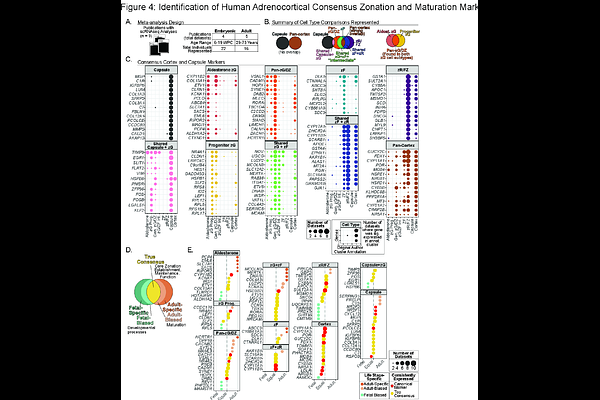
AbstractThe adrenal cortex is a critical for life endocrine system. It manages metabolic homeostasis, electrolyte balance, stress response, and sex development. This is accomplished through the release of various steroids from a dynamically changing landscape of concentric cellular zones/layers. Adrenocortical dysfunction is implicated in pathologies ranging from adrenal insufficiency to hypertension. The in-depth investigation of adrenal gland biology, pathology and drug discovery has been hampered by a lack of human, experimentally tractable models. Particularly missing are models that recapitulate the cellular diversity of the adrenal cortex with representation of all fetal and adult cell layers and the capsule. Here, we employ human pluripotent stem cells (hPSCs) to generate cells of all three cortex zones alongside capsular cells in a single 2D platform. This platform mimics the cellular diversity expected from an organoid, yet it provides the simplicity of monolayer cultures, that are better suited for drug discovery and high-throughput settings. These cultures secrete zone-specific steroids (cortisol, aldosterone, and DHEA-S) and exhibit robust, physiologically relevant ACTH stimulation responses. Transcriptomic analysis revealed sequential acquisition of profiles consistent with adrenocortical development, zonation, and signaling programs consistent with zone maintenance. Our platform is validated by a literature meta-analysis that defines transcriptomic signatures for each human cortical cell type, spanning fetal and adult stages. Together, this novel adrenocortical platform enables investigation of adrenal development, disease mechanisms, and therapeutic strategies. Significance StatementWe describe a hPSC-based 2D differentiation strategy with the cell type complexity of an organoid and the technical simplicity necessary for high-throughput assays. The platform contains all cortical subtypes that mediate electrolyte regulation, stress response, sex development and self-maintenance of the tissue. This co-differentiation offers a unique opportunity to study human adrenal development, biology, pathology and enables drug discovery.