Quantification of anatomical changes in young grapevine wood over time and in response to Neofusicoccum parvum with image processing

Quantification of anatomical changes in young grapevine wood over time and in response to Neofusicoccum parvum with image processing
Perrin, C.; Courbot, J.-B.; Leva, Y.; Pierron, R.
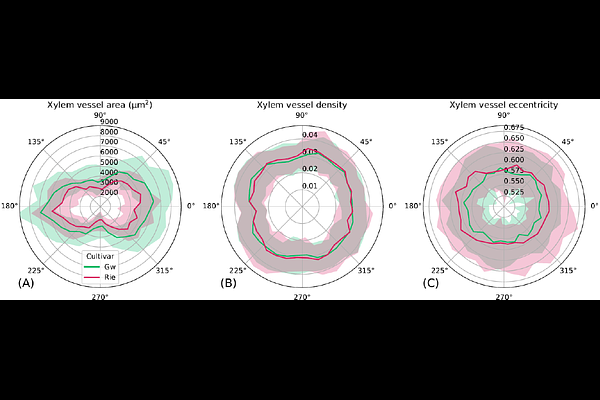
AbstractGrapevine Trunk diseases (GTDs) represent a major threat for the wine industry. Despite several breakthroughs, their etiology remains unclear and no curative treatment is currently available. Wood anatomy and water transport contribute to the symptoms of young plant decline. This study investigates wood anatomical alterations in two Alsatian grapevine cultivars presenting different susceptibility to GTDs, focusing on wood structure over six months of vegetative growth and in response to infection. Using a validated FasGa staining protocol, wood sections from transverse, tangential, and radial directions were stained to differentiate lignified and cellulosic tissues. Microscopic analysis was performed at x4, x10, and x40 magnifications, yielding a dataset of 4771 images. To support this high-throughput quantitative analysis of microscopy images, a computational model was developed, enabling reliable and efficient assessment of anatomical traits. Pre-established woody tissues presented higher xylem vessels diameter in Gewurztraminer than Riesling, with a dorso-ventral arrangement whereas the number of vessels remained the same all over the cross-section. No significant anatomical changes were observed in established woody tissues, whereas newly formed xylem anatomy showed a possible rearrangement during infection, especially in Gewurztraminer cultivar. Furthermore, colorimetric analysis quantified the lignification of woody tissues in response to wounding damage compared to untreated plants. While definitive conclusions remain limited due to the experimental timeframe and sample variability, the findings highlight the need for longer-term studies and broader cultivar evaluation. Code and microscopy images have been made publicly available, providing a scalable digital tool for future research in plant vascular systems.