Beyond Regional Activations: Structural Connectivity Message-Passing Shallow Neural Networks for Brain Decoding

Beyond Regional Activations: Structural Connectivity Message-Passing Shallow Neural Networks for Brain Decoding
Ramos, M. B.; Marques dos Santos, J. D.; Direito, B.; Reis, L. P.; Marques dos Santos, J. P.
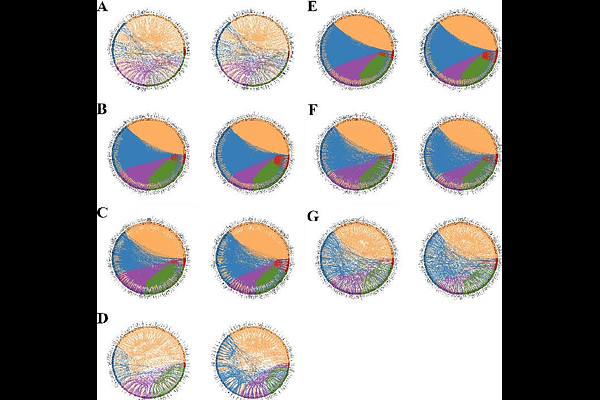
AbstractBrain decoding from fMRI data using artificial neural networks traditionally operates at the regional level, identifying which brain areas activate during tasks but ignoring how these regions interact through structural networks. While Graph Neural Networks can capture connectivity, they require prohibitively large datasets for typical neuroscience studies. We introduce a message-passing mechanism that allows a shallow neural network to incorporate structural connectivity, enabling network-level interpretation from limited data. Using motor task data from 30 Human Connectome Project subjects, we evaluate seven structural connectivity matrices derived from deterministic and probabilistic tractography. Our approach achieves 83.0% classification accuracy while revealing functional network organization. We demonstrate that sparser, anatomy-driven connectivity matrices outperform dense alternatives, and that normalizing for network size improves model performance. Critically, our method is capable of exposing structural pathways contributing towards classification, distinguishing between complete network recruitment and selective regional activation. This approach bridges the gap between high-performance brain decoding and biological fidelity of the model, enhancing neuroscientific understanding, with implications for analyzing network dysfunctions in neurological disorders such as Alzheimer's disease (AD), attention deficit hyperactivity disorder (ADHD), autism spectrum disorder (ASD), bipolar disorder, mild cognitive impairment (MCI), and schizophrenia.