A Glutamine antagonist-modulated tumor microenvironment unleashes enzalutamides immunotherapeutic effects

A Glutamine antagonist-modulated tumor microenvironment unleashes enzalutamides immunotherapeutic effects
Yu, J.; Jiang, X.; Yao, H.; Xing, Z.; Zhang, F.; Jin, C.; Alhamo, M. A.; Zhang, H.; Wang, B.; Bowie, M. L.; Meng, O.; George, D. J.; Wild, R.; Gao, X.; Zhang, Y.; Ashley, D. M.; Pirozzi, C. J.; Staats, H. F.; He, Y.; Huang, J.
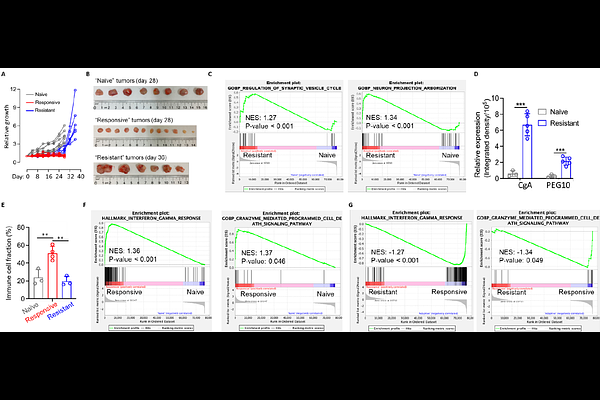
AbstractAndrogen receptor (AR) antagonists, such as enzalutamide, suppress prostate cancer (PCa) cells to achieve temporary therapeutic effects. In addition to tumor cell-autonomous suppressive function, AR antagonists can also potentially exert anti-tumor effects via mitigating cytotoxic T cells exhaustion. However, strategies for effectively harnessing enzalutamides immunotherapeutic effects remain elusive. In studying a recently described glutamine antagonist prodrug (DRP-104) in PCa models, we found that despite the initial response, tumors ultimately became resistant. Intriguingly, compared to the untreated (DRP-104 treatment-naive) tumors, the resistant tumors became highly susceptible to enzalutamide in vivo. Additionally, treating tumors with DRP-104 and enzalutamide simultaneously also yielded superior therapeutic efficacy. We demonstrated that DRP-104 therapy promoted the infiltration of CD8+ T cells as well as regulatory T cells (Treg) in responsive tumors, and the tumor-infiltrating Treg were mostly depleted upon enzalutamide treatments. Mechanistically, we showed that Treg differentiation from mouse CD4+ T cells was attenuated by enzalutamide. We further demonstrated that Treg induction was accompanied by the interaction between AR and aryl hydrocarbon receptor (AhR), the nuclear receptor indispensable for Treg differentiation, in the nuclei of CD4+ T cells, and this interaction was diminished by enzalutamide. In further support of AR signaling in Treg biogenesis, analysis of available gene expression datasets found that AR expression was elevated in Treg when compared to CD4+ T cells in human peripheral blood mononuclear cells (PBMCs). In addition, it was positively correlated with Treg module scores in several human cancer types. Finally, using an anti-GPC3 (Glypican 3) vaccination model, we demonstrated that CD4+ T cells subjected to Treg induction in the presence of enzalutamide were less effective in protecting GPC3-expressing tumor cells from CD8+ T cells cytotoxic killing. Collectively, these results suggest that AR promotes Treg s differentiation and/or immunosuppressive functions, and nominate enzalutamide as a Treg-mitigating agent for potentiating immunotherapies. Our results also demonstrate that an otherwise unintended, Treg-promoting property of DRP-104 can be leveraged to unleash the immune-regulatory function of enzalutamide for the treatment of PCa.