Neonatal regulatory T cells promote alveologenesis by restraining neutrophil-mediated inflammation

Neonatal regulatory T cells promote alveologenesis by restraining neutrophil-mediated inflammation
Sen, M.; Lui, P. P.; Aziz, H.; Xu, J. Z.; Ali, N.
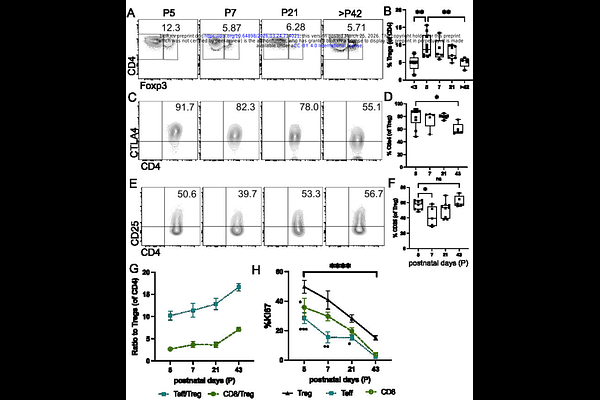
AbstractAlveologenesis during early postnatal life requires tight coordination between epithelial differentiation and immune regulation, yet how immune cells contribute to this process remains unclear. Regulatory T cells (Tregs) are established mediators of immune homeostasis and tissue repair in adult lung injury, but their role in lung development is unknown. Here, we identify a transient wave of highly proliferative, activated Tregs that accumulates in the neonatal lung during an early postnatal window. Using inducible Treg ablation, we show that loss of this neonatal Treg population disrupts alveologenesis, resulting in enlarged airspaces, and persistent structural abnormalities later in life. Treg depletion also induces interferon-associated inflammatory programmes, promotes neutrophil accumulation, and is accompanied by a sustained imbalance in alveolar epithelial populations. Notably, neutrophil depletion partially rescues both epithelial composition and alveolar structure, identifying neutrophils as key downstream effectors of Treg-mediated regulation. Together, these findings show that neonatal Tregs are required for normal alveologenesis by restraining neutrophil-driven inflammation and preserving epithelial balance. Our study reveals a previously unappreciated role for immune regulation in lung organogenesis.