Restricting Dietary Isoleucine Promotes Foxo3-Dependent Mitochondrial Respiration by Reducing Caloric Intake

Restricting Dietary Isoleucine Promotes Foxo3-Dependent Mitochondrial Respiration by Reducing Caloric Intake
Austin, J.; He, M.; Yang, Z.; Sayed, D.; Sayed, D.; Abdellatif, M.
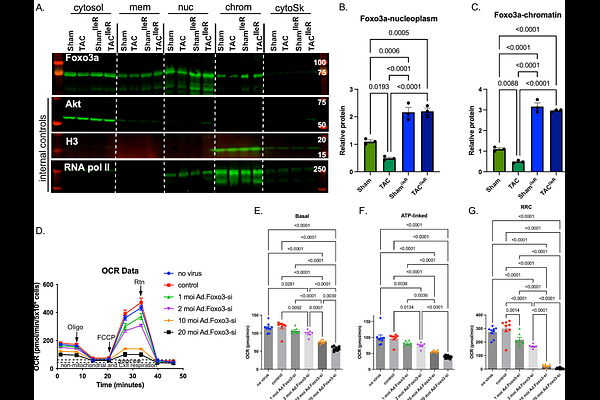
AbstractOur prior work demonstrated that lowering dietary branched-chain amino acids (BCAAs) improves cardiac outcomes during pressure overload-induced stress. Here, we identify isoleucine restriction (IleR) as the key driver of this effect. Dietary isoleucine restriction induces hypophagia and weight loss, recapitulating the effects of caloric restriction (CR). Although it does not prevent the initial development of left ventricular hypertrophy, it halts its progression and the decline in ejection fraction compared with controls. This is associated with preservation of electron transport chain (ETC) gene expression, cristae structure, NAD+/NADH levels, and mitochondrial respiratory capacity in cardiomyocytes, which is recapitulated by CR. Mechanistically, both IleR and CR diets increase Foxo3 expression, thereby blocking the decline in expression of its target ETC and mitochondrial genome-encoded genes. Consequently, this improves mitochondrial respiratory capacity and reduces cardiac fibrosis. We conclude that restricting dietary isoleucine improves cardiac health by increasing Foxo3 expression and mitochondrial function via a cell-autonomous mechanism and by reducing caloric intake.