Barcoding biology: Chemotype predicts variation in genotype, physiology, and stress response

Barcoding biology: Chemotype predicts variation in genotype, physiology, and stress response
Ibrahim, R.; Gonzalez Jimenez, M.; Booth, J.; Sannino, D. R.; Gemmell, A. O.; Fernandes-Guerrero, I.; Hadjipakkos, P.; Castejon-Vega, B.; Zussman, R.; Woodling, N.; Wynne, K.; Dobson, A. J.
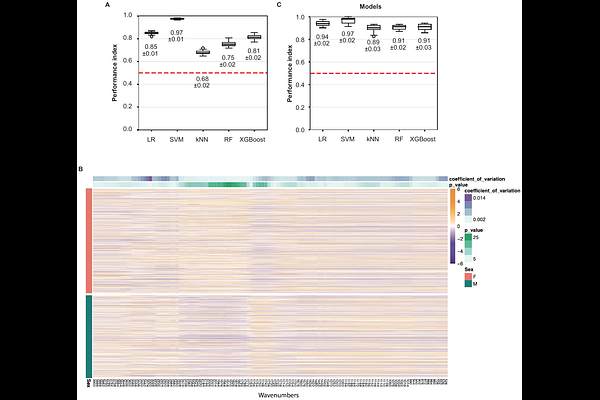
AbstractPredicting biological responses to perturbations such as stress, nutrition, or pharmaceuticals could transform healthcare and biosciences. The task is challenging because complex interactions among many factors interactively drive biological variation, and thereby alter responses. However, metabolism integrates these drivers of variation, suggesting that emergent biological states may be reflected in aggregate chemical states. We define such states as chemotypes and test their predictive utility. Using Fourier-transform infrared (FTIR) spectroscopy coupled with machine learning in Drosophila melanogaster, we show that chemotypes serve as proxies for biological variation driven by sex, genotype, nutrition and age, and - critically - predict among-population variation in stress response. These findings indicate that chemotypes provide a computable and integrative representation of organismal biology, predicting genotype, phenotype, and response to perturbation.