Human 28S rRNA analysed by state-of-the-art oligonucleotide mass spectrometry: benchmarking current capabilities and a call to action for MS-Seq

Human 28S rRNA analysed by state-of-the-art oligonucleotide mass spectrometry: benchmarking current capabilities and a call to action for MS-Seq
Schicktanz, J.; Qi, Y.; Wu, J.; Hamal, B.; Lechner, A.; Wein, S.; Knittelfelder, O.; Yesiltac-Tosun, N.; Dalwigk, J. F.; Hoja, K.; Rusling, L.; Obersteiner, S.; Bellenberg, E.; Kerkhoff, K.; DeMott, M. S.; Ross, R.; Wolff, P.; Breuker, K.; Limbach, P. A.; Dedon, P.; Kaiser, S.
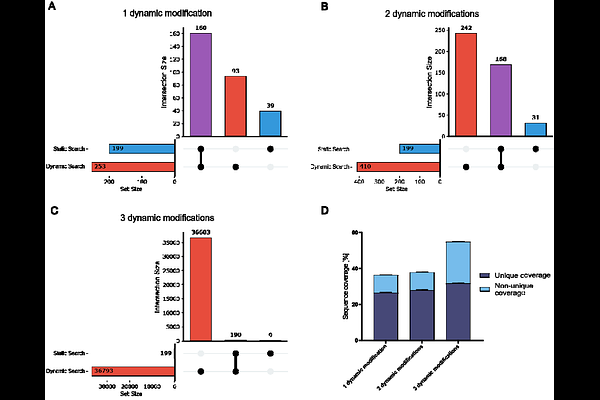
AbstractOligonucleotide mass spectrometry (MS-Seq) is emerging as a powerful approach for sequence-resolved RNA modification analysis, yet the field lacks standards for experimental workflows, data analysis and reporting. To assess current capabilities, the Human RNome Project Consortium conducted a cross-platform benchmarking study using a common RNA sample. A partial RNase T1 digest of human 28S rRNA was distributed to participating laboratories and analysed using existing LC-MS/MS workflows spanning different chromatographic strategies and mass spectrometers. To enable direct comparison, datasets were analysed using a harmonized NucleicAcidSearchEngine (NASE) workflow. Despite substantial methodological differences, laboratories recovered highly overlapping oligonucleotide sets and generated similar sequence coverage maps with a global coverage of 54.16%, demonstrating reproducible sequence information across platforms under standardized sample and analysis conditions. The benchmark further revealed incomplete sequence coverage, platform-specific differences in data architecture and increased assignment ambiguity during dynamic modification searches. Together with the community consensus developed during the HRPC workshop, these findings define priorities for the field, including improved sensitivity, standardized data analysis and reporting, community repositories, and robust bioinformatic workflows for confident de novo RNA modification discovery. This study provides an experimental benchmark and roadmap toward routine MS-based mapping of the human RNome.