Modeling the metabolic heterogeneity of high-grade serous ovarian cancer solid tumors in 3D Microphysiological systems

Modeling the metabolic heterogeneity of high-grade serous ovarian cancer solid tumors in 3D Microphysiological systems
Manan Mejias, P. M.; Boonpattrawong, N.; Berube, M.; Letts, E. K.; Reed-McBain, F.; Peraza Munuzuri, A. S.; Vazquez, Y. N.; Patankar, M.; Virumbrales-Munoz, M.
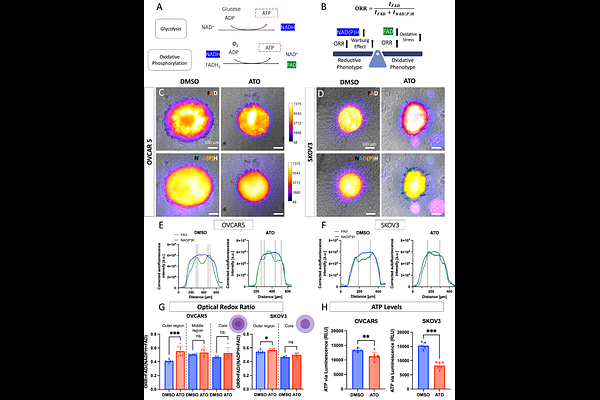
AbstractHigh-grade serous carcinoma (HGSOC) is the deadliest subtype of ovarian cancer, characterized by high metastatic rates. HGSOC is typically diagnosed at late stages, and treatment options are limited, resulting in a 60% recurrence rate. HGSOC cells exhibit metabolic plasticity, dynamically shifting between glycolysis and oxidative phosphorylation (OXPHOS) to meet energy demands for tumor progression. To evaluate therapeutic strategies that target metabolic vulnerabilities, we developed a microphysiological system (MPS) that recapitulates the heterogenous cell states and bioenergetic distribution of HGSOC solid tumors. Our platform utilized HGSOC spheroids embedded in a collagen hydrogel that mimics the extracellular matrix to capture tumor progression in the ovary. We used atovaquone (ATO), an FDA-approved OXPHOS inhibitor, to prototype the capabilities of our platform to investigate metabolic plasticity in HGSOC. Treatment with ATO decreased viability and invasion of HGSOC spheroids. Crucially, ATO exhibited no cytotoxicity toward biomimetic blood vessels, preserving their integrity and permeability. Metabolic imaging revealed that ATO induces an oxidative state in the outer region of the spheroids. At the invasive front, ATO disrupted mitochondrial organization, forcing collective cell migration and eventually inducing breakdown of mitochondrial networks. Furthermore, ATO decreased YAP/TAZ pathway activity in the outer region of the spheroid, providing a potential mechanism for hindered cell invasion. Collectively, our data demonstrates that a low-potency OXPHOS inhibitor like ATO can effectively target metabolic plasticity to suppress HGSOC spheroid progression. Overall, this platform successfully recapitulated metabolic heterogeneity and provided a workflow for safely testing other drugs that target cancer metabolism.