Targeting the 3 splice site by a decoy oligonucleotide attenuates U2AF1 splicing activity and inhibits leukemia

Targeting the 3 splice site by a decoy oligonucleotide attenuates U2AF1 splicing activity and inhibits leukemia
Azar-Koussa, C.; Sakran, M.; Rahamim, E.; Prabhu, A. V.; Salem, S.; Heinberg, A.; Siegfried, Z.; Ben-David-Naim, M.; Zimran, E.; Levanon, E.; Granot, Z.; Karni, R.
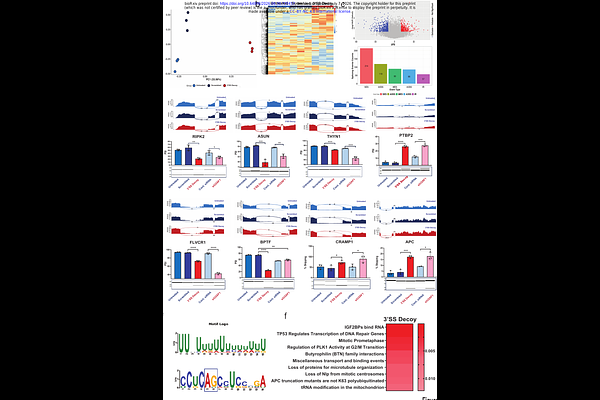
AbstractMutations in spliceosomal genes are a hallmark of myeloid malignancies, yet leukemic cells remain dependent on residual splicing activity, exposing a therapeutic vulnerability. Here, we present an RNA decoy strategy that disrupts 3' splice site recognition by competitively engaging spliceosomal components. We engineered a chemically stabilized RNA decoy that mimics the 3' splice site (3'SS decoy), sequestering proteins involved in 3' splice site recognition from endogenous pre-mRNA targets. Although the decoy is expected to engage multiple components the 3 splice site recognition complex, U2AF1 served as the primary molecular readout to assess target engagement and downstream effects. Lipid nanoparticle (LNP) encapsulation enabled efficient intracellular delivery into leukemic cell lines and patient-derived blasts, where the decoy directly engaged the splicing machinery, induced widespread splicing alterations, impaired leukemic cell fitness in vitro, and significantly reduced leukemia burden in vivo. These effects were independent of spliceosomal mutational status, establishing decoy-mediated disruption of splicing factor activity as a mechanistically targeted therapeutic strategy for myeloid malignancies.